

| * | These are SA employees, not the total Group including Namibia and Mauritius. |
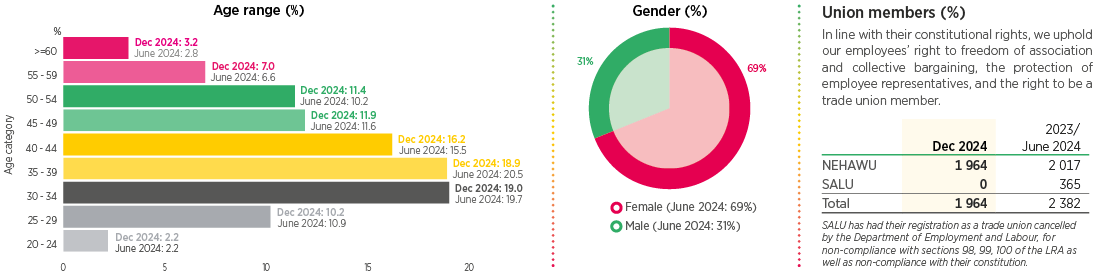
Staff movement
In the past period, AfroCentric has seen an increase in directors from previously disadvantaged groups, a significant pragmatic step to improve top management-level transformation.

| * | These are SA employees, not the total Group including Namibia and Mauritius. |
As part of our efforts to drive diversity and transformation, there was a 0.8% improvement in previously disadvantaged groups’ recruitment overall by December 2024 compared to June 2024. Despite the ongoing war on talent, we attracted an additional 89 employees at the professionally qualified occupational level. This is crucial to our succession strategy to create a talent pool for the next level.
New employee hires and turnover
By gender

By age

By race
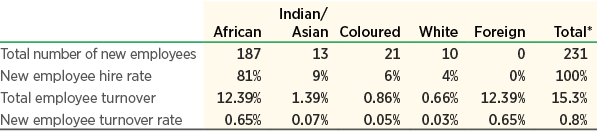
| * | These are SA employees, not the total Group including Namibia and Mauritius. |
Our culture journey – refreshing and re-connecting to a values-driven culture
Our culture journey has spanned almost six years. Over this time, our business’s culture has consistently been one of its most vital success factors. We have sustained a workforce of engaged and productive employees supported by committed leadership and grounded by a robust set of organisational values.
The Group has grown considerably. Some of these changes include changes in leadership roles, partnering with new subsidiaries and diversifying our distribution services among others. The growth across the Group presents an opportunity to re-evaluate our organisational values as we seek to align with the Sanlam Group.
Employee listening strategy
In October 2024, we conducted our second sentiment survey, which highlighted significant progress in fostering a positive workplace culture. The findings revealed a 3% increase in employee job satisfaction, a 3% improvement in perceptions of line management, and a 2% rise in employee motivation and eagerness to excel. The movement of themes from the first to the second survey indicated a shift in employee priorities and concerns, focusing on leadership and management, communication, benefits and compensation, job satisfaction, and feedback and performance management.
The second survey also introduced leadership sentiment as a variable topic. The results indicated that 90% of employees respect their leaders, 81% believe their leader is someone of integrity and strong character, and 76% agreed that their leader creates an inclusive environment. While opportunities remain for improvement – such as enhancing psychological safety and promoting open dialogue – the overall sentiment towards leadership at AfroCentric was largely positive.
These results were cascaded throughout the Group with the support of the Human Capital team, ensuring transparency and allowing leaders to share and discuss area-specific results and co-create potential corrective actions. Group-wide interventions and activities will be incorporated into the Culture Refresh Journey throughout 2025.
Employee wellbeing
We understand the importance of employee wellbeing in driving organisational success, enhancing engagement, and fostering a high-performance culture. As such, we prioritise creating positive employee experiences through a comprehensive and personalised wellness programme.
Our holistic wellness strategy addresses psychological, financial, organisational, physical, and social wellbeing, ensuring a well-rounded approach to employee support. Beyond meeting regulatory requirements, we view health and safety as a foundational responsibility. As the workplace evolves, we continuously update our protocols through training, safety assessments, and open communication, fostering an environment where employees can thrive safely and confidently.
In addition to the medical aid provided to staff, we introduced an affordable primary health insurance option to support our employees in lower-income brackets. This initiative caters to the pressing need for quality, affordable medical coverage that is straightforward and easily accessible. Employees earning below a specified threshold may also be eligible for up to 50% subsidy.
During the period, 2 177 clinic consultations were undertaken at our various offices, with employees utilising the services for health checks, medication administration and family planning.
583 individual cases were opened and managed in the period under review. The individual utilisation rate of 34.3% was above the sector average of 4.5%, with 152 individual employees and 50 dependents accessing the services.
Our analysis indicated that the top five services accessed through the employee wellness programme were related to mental health, financial concerns, workplace issues, relationship challenges, and personal development. This highlights the diverse range of concerns addressed through the employee wellness programme, with mental health emerging as the most prominent area of support.
Several wellness interventions were rolled out to address various employee needs during the period. The “Did You Know” series, conducted from July to October, focused on wellness communication campaigns. Resilience training sessions were provided to various teams, including the GEMS Fund, GEMS Pre-Auth, Internal Audit, and GEMS Medical Advisory Operations teams. These sessions aimed to enhance the resilience and coping skills of employees.
Empowerment sessions were also conducted for managers, service excellence forums, and team leaders. These sessions covered topics such as recognising and supporting at-risk employees, work-life balance, absence management, psychological safety, and updates on employee benefits, including parental leave.
The Mental Health Round Table discussions addressed critical topics such as neurodiversity, suicide and mental health, and stress, loneliness, and sadness. The Movember/Men’s Health campaign included a fireside conversations webinar, and the Mental Health Month Campaign featured a Psychological Safety campaign and webinar.
Overall, the wellness initiatives undertaken during this period reflect a comprehensive and responsive approach to employee health and wellbeing, ensuring that employees receive the necessary support and resources to thrive personally and professionally.
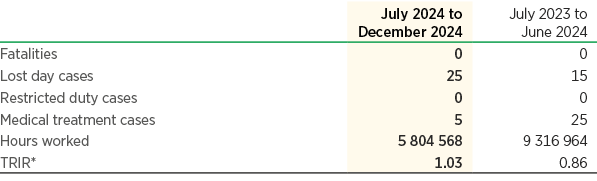
| * | Total recordable incidences rate (TRIR). |
Partnerships that enhance our employee experience
AfroCentric has partnered with a reputable financial services partner to create a banking proposition for all staff, including home loans, vehicle finance, investments, and solar/capital assistance. We place importance on ensuring our employees not only have access to financial services but also can negotiate reduced fees and additional benefits.
Recognition programme
Our Ignite Recognition initiative aims to acknowledge and recognise employees, teams, and leaders for living the Group’s values and purpose and reward excellence when employees go above and beyond. The recognition programme is leader-led, thus enabled and supported by the Group’s leaders.
The programme also recognises the positive difference we make to the communities we live and operate in. It further strives to drive the Group strategy by leveraging our full AfroCentric potential by recognising out-of-the-ordinary collaboration, integration, and innovative initiatives.
With over 162 nominations received, we have seen remarkable interest and participation since the launch of this initiative.
The various categories awarded included:
- Shaping our future: Driving the strategy by leveraging our full AfroCentric potential by collaborating, integrating and innovating
- AfroCentric Citizen: Living our purpose and values – transforming lives for our customers, clients, people and partners
- Community Citizen: These teams exemplify the AfroCentric Group’s commitment to making a positive difference in the communities we live and operate in
Work arrangements fit for our business
To support our transition to a hybrid workplace, we introduced an updated working arrangements policy. Alternatives such as fully remote and hybrid roles form part of our new ways of working as we strive to attract and retain the best talent in the healthcare industry. The policy allows staff to choose from various modalities within the context of operational requirements.
Top Employer 2023/2024
After AfroCentric’s first measurement, we are proud to announce that we have attained the status of one of South Africa’s Top Employers, as designated by the globally recognised Top Employers Institute.
The Top Employers Institute’s rigorous certification process evaluates organisations based on their performance in crucial human capital domains, including people strategy, work environment, talent acquisition, learning, diversity, equity and inclusion, wellbeing and more.
The Top Employers Institute Certification Programme has certified and recognised over 2 300 Top Employers in 121 countries/ regions, positively impacting the lives of over 12 million employees globally.
Online learning
The AfroCentric Online Academy offers online training. Employees have constant virtual access to legislative courses, Company policies and functional training courses.

7 601
online courses were undertaken by
4 040
employees
(June 2024: 642 courses undertaken by 3 927 employees)
Learnerships
These programmes help candidates earn qualifications and gain valuable work experience.

New learnerships will be rolled out during the second quarter of 2025 while
8
unemployed youth participated in learnership programmes
(June 2024: 157 unemployed youth)
57
learnerships catered to people with disabilities
(June 2024: 142)
Skills development
Sector Education and Training Authority and industry-funded learnership initiatives were implemented and prioritised across the Group.
AfroCentric Health partners with Business Beyond Boundaries and Gauteng City College, hosting 57 unemployed learners with disabilities offsite and onsite (June 2024: 142 learners).
R1.4 million
invested towards developing unemployed learners with disabilities
(June 2024: R2.8 million invested)
Bursaries
We offered study assistance to six employees to the value of
R0.19 million
(June 2024: 15 employees at R1.18 million)
Bursaries
R0.3 million
(June 2024: R5.2 million)
Internships
These programmes help candidates gain valuable work experience after obtaining a qualification.
32
other learners participated in internship programmes
(June 2024: 25)
Performance management
AfroCentric uses a balanced scorecard (BSC) approach for performance management. The BSC provides management with the tools to drive competitive success. It translates the organisation’s strategy into performance measures that provide the framework for a strategic measurement and management system.
When managing individual performance, we aim for a mutually beneficial environment where managers and employees share clear expectations and objectives. Employees participate in all phases of the performance management process and share ownership of the outcomes with the organisation.
Continuous conversations, feedback and development
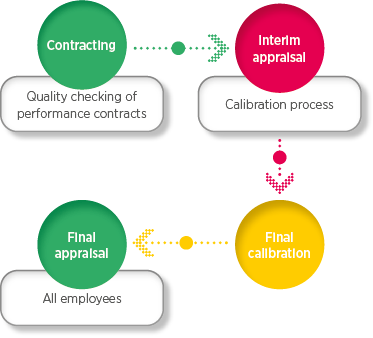
Managing performance is not an annual event but a continual process of feedback and collaboration. Performance discussions are therefore expected to cover more than simply performance ratings. Instead, leaders should have regular, meaningful conversations to close performance gaps and enable individuals to understand how their performance and behaviour link to the organisational strategy and how their contributions drive business growth.
Our performance management system aims to enable:
- A streamlined performance management process to direct line managers’ time from administrative activities to ongoing performance conversations
- High-quality performance discussions, giving employees more frequent feedback and addressing performance gaps in real time
- The creation of a high-performance culture within the organisation
- Employee-led performance management
- Difficult conversations that drive positive change
TRANSFORMATION AND B-BBEE
As the most transformed health-related business listed in South Africa, we are committed to corporate citizenship, driving transformation and upholding our social licence to operate. The Group invests in healthcare-related companies, and our contribution to healthcare extends beyond our products and services. Our social impact starts within the Group and extends to the suppliers and communities we directly impact, as well as the broader society affected by our health management initiatives. We value diversity, equity and inclusion and aim to create an environment where differences are valued, as demonstrated by our diverse workforce and supply chain.
B-BBEE creates opportunity while mitigating operational risk
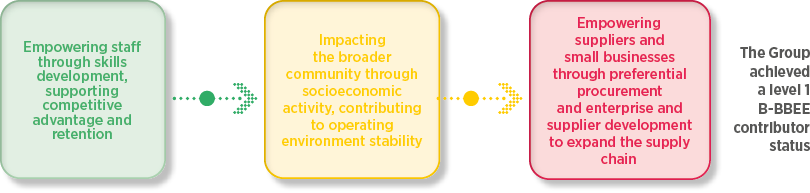
AfroCentric’s transformation framework supports national strategic priorities and our purpose of creating sustainable healthcare solutions to enhance our stakeholders’ quality of life.
The degree of the Group’s alignment of B-BBEE policies and practices to the requirements of the different transformation-related legislation in support of the South African Government’s overall economic transformation includes, but is not limited to:
- The NDP 2030
- The National Strategy for Broad-Based Black Economic Empowerment
- The Revised Broad-Based Black Economic Empowerment Act 53 and related amendments
- The Amended Codes of Good Practice on Broad-Based Black Economic Empowerment of 2013
- The Employment Equity Amendment Act of 2014 and associated regulations
- Skills Development Act and related Skills Development Levies Act
- The Preferential Procurement Act
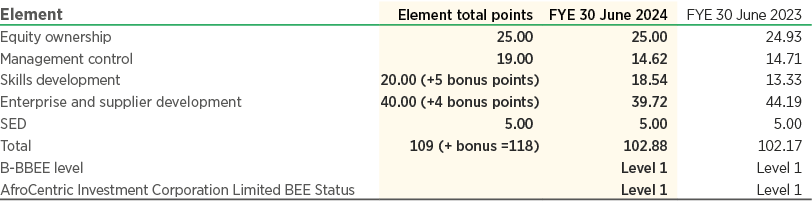
AfroCentric Investment Corporation Limited BEE Status
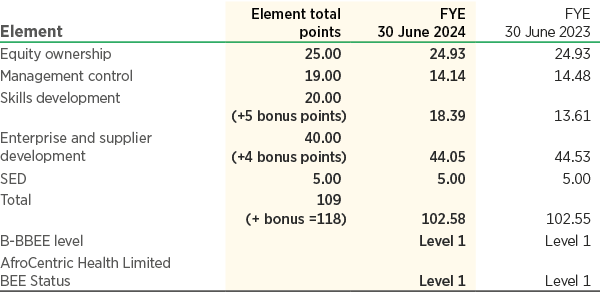
AfroCentric Health Limited BEE Status
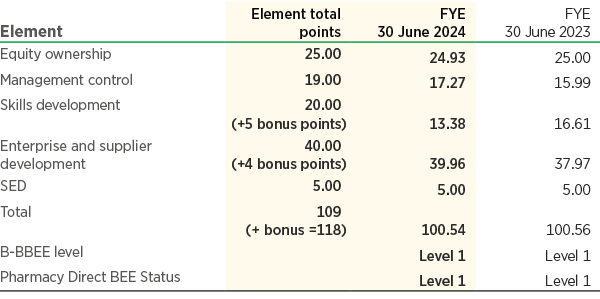
Pharmacy Direct BEE Status
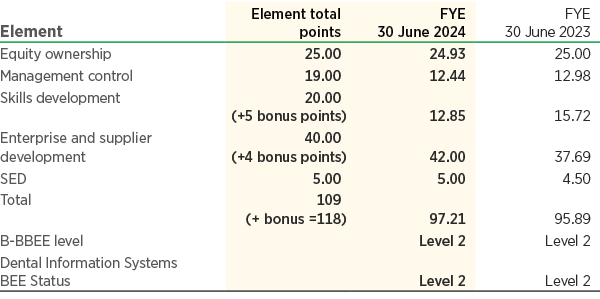
Dental Information Systems BEE Status
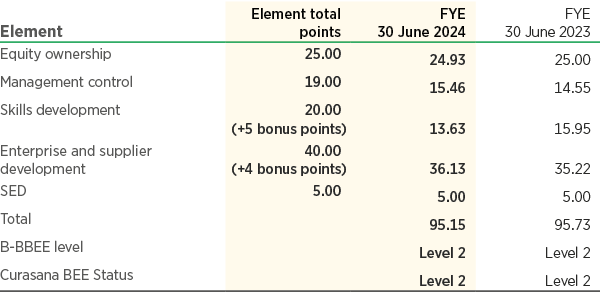
Curasana BEE Status
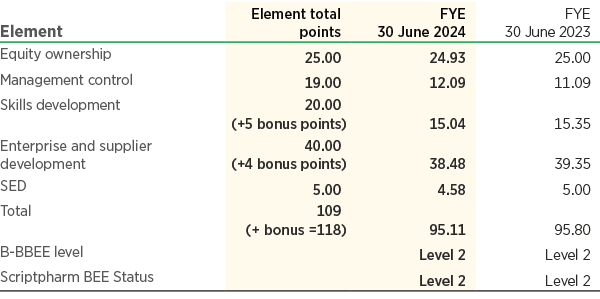
Scriptpharm BEE Status
SUPPORTING OUR COMMUNITIES
We recognise that the sustainability of AfroCentric is closely linked to the socioeconomic environments in which our businesses exist. Accordingly, our role as a socially responsible enterprise includes a strong focus on supporting broader communities, and we are dedicated to improving community life and access to economic opportunities.
The South African National AIDS Council (SANAC)
SANAC is a coalition of privately-owned companies and organisations committed to investing their resources to harness employee health and create healthier workplaces to impact workforces and host communities to promote sustained economic growth and wellbeing. We invested R1 million towards their mission during the year (June 2024: R1 million).
Eluthandweni Maternity Health Services
Eluthandweni started as a birthing clinic and now, with the addition of a satellite branch in Alberton Mall, offers various services such as prenatal care, family planning, and child immunisation.
Empowering black-owned enterprises through supplier and enterprise development
As part of our commitment to enterprise and supplier development, the AfroCentric Health Group continues to invest in black-owned businesses, driving economic growth and sustainability.Enterprise development:
Mommy Bear Woman and Child Clinic Proprietary Limited received R1.1 million. Located in Springs, Gauteng, the clinic offers comprehensive antenatal and postnatal care, immunisations, family planning, and wellness checks, focusing on the health and wellbeing of women and children.
Naledi Baby Brands Proprietary Limited received R1.5 million. Based in Pretoria, this company specialises in baby gear and furniture, providing essential products to support new parents.
Supplier development:
Moyreg Proprietary Limited received R5.1 million. Established in 2019, Moyreg is involved in technical review services for mine health and safety projects, enhancing workplace safety in the mining sector.
These contributions, totalling R7.7 million, reflect the Group’s dedication to empowering black-owned enterprises and fostering economic growth within the community.
HUMAN RIGHTS AND COMMUNITY DEVELOPMENT
As a purpose-driven Group, upholding human rights across our value chain is critical. In line with this objective, during the year:
- No operations were subject to human rights reviews or human rights impact assessments
- No violations of human rights were reported
- No issues were raised that indicated that the business was not supporting and respecting the protection of internationally proclaimed human rights
- There was no indication that the business was complicit in human rights abuses
- Whistleblowing reports are one of the sources used to determine conduct issues, and there were no issues raised regarding human rights abuses through this reporting channel
- We did not subscribe to forced or compulsory labour
- We did not employ individuals aged younger than 18
- No discrimination was identified concerning employment and occupation
- There were no material risk events reported pertaining to human rights breaches
- Whistleblowing reports and grievances do not indicate any failure in this regard