Climate change
Climate change is humanity’s most significant health threat. The Intergovernmental Panel on Climate Change has concluded that to avert catastrophic health impacts and prevent millions of climate change-related deaths, the world must limit temperature rise to 1.5°C.
To mitigate our direct environmental impacts, we aim to continuously improve our performance by diversifying and reducing our use of natural resources and preventing pollution.
GHG emissions
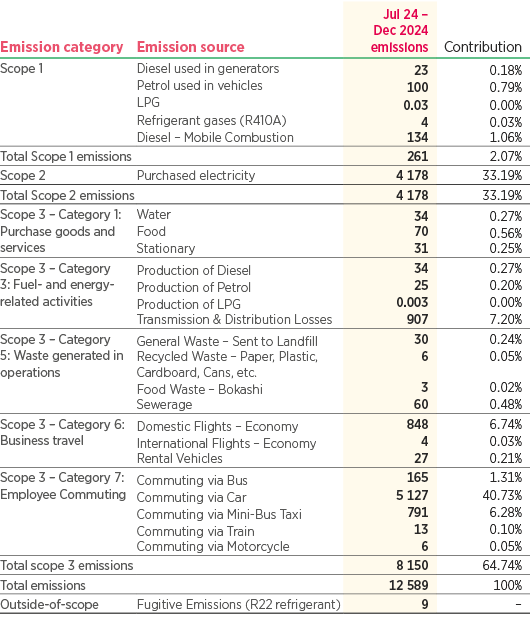
The following table provides a detailed overview of AfroCentric Group’s July 2024 to December 2024 GHG inventory, including the percentage contribution of each category and sub-category to the total GHG inventory. The scope of this assessment includes 26 office clusters distributed across the country.
This report does not provide the Mandatory GHG Reporting emissions information in the format required by the South African Department of Forestry, Fisheries and the Environment, per the National GHG Emission Reporting Regulations. This is because, in previous reporting periods, our operations were below the department’s reporting thresholds for listed activities. Since the integration of the group’s activities, we have been engaging with the department to assess if we have triggered the threshold for DFFE reporting requirements.
Combustion of diesel in back-up generators is one of the most likely listed activities for reporting. The reporting threshold is based on the total installed capacity of 10 MWth of back-up diesel generators in the South African office clusters.
The total GHG inventory for July 2024 to December 2024 amounted to 12 589 tCO2e. Within this period, an additional 9 tCO2e was also emitted from fugitive emissions (R22 refrigerant gas) that are reported outside-of-scope according to the GHG Protocol. Direct (Scope 1) GHG emissions amounted to 261 tCO2e.
Total indirect emissions amounted to 12 328 tCO2e in the reporting period, including emissions related to electricity purchased, transportation, waste management, and the purchase of goods used by the organisation. However, emissions from purchased electricity (Scope 2) contributed 4 178 tCO2e to the overall indirect emissions for the reporting period.
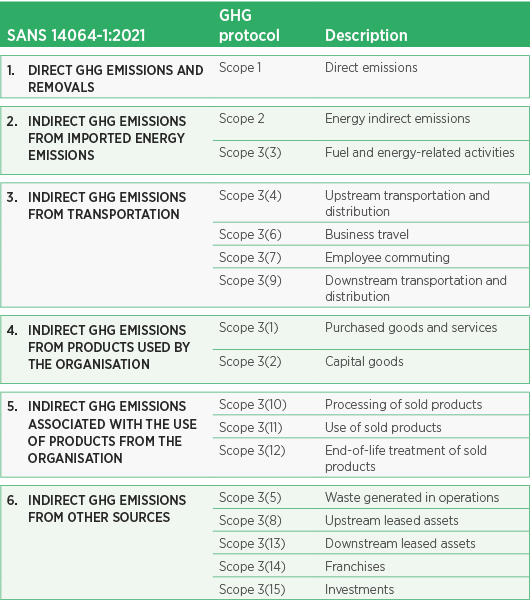
Emission category mapping between GHG Protocol and SANS 14064-1:2021
Energy mix
While our current energy composition is anchored in non-renewable sources, as we chart our path forward, we are committed to transitioning towards utilising more renewable sources, aligning ourselves with global sustainability standards and playing our role in mitigating the impacts of climate change.
Early in 2024, we started discussing using solar power solutions for some of our buildings, including those we lease. These conversations culminated in our landlord agreeing to install solar power for two of our leased buildings, which were completed in August 2024, which are grid-tied installations. With our purposeful drive for this energy mix, we also installed solar power for one of our owned buildings in December 2024, bringing the total installed solar power capacity on campus to 480 kWp.
Water
We recognise that water is a finite resource, and within our context, many of our operations are located in water-stressed areas. Therefore, managing our water consumption is a moral obligation that helps mitigate operational, regulatory and reputational risks relating to water use while reducing operating costs.
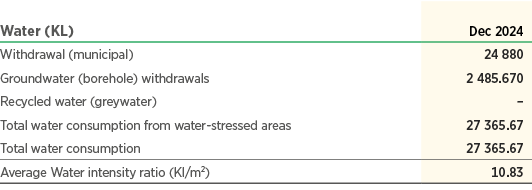
While the borehole installation was concluded in January 2024, some refinements needed to be undertaken. These were completed, and the metered water utilisation for the reporting period is 2 485.67 KL of ground water directly from our borehole system. We are currently in consultation with a geohydrologist for the borehole registration process, which will take approximately six months to conclude.
Pollution and waste
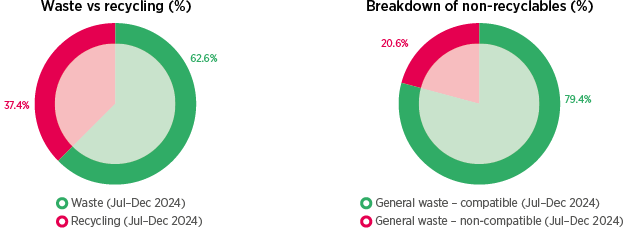
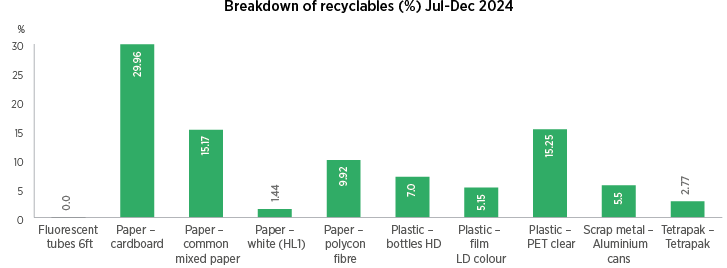
We strive to reduce our impact on the natural environment through effective waste management, which can also reduce operational and capital costs through improved efficiencies. In contrast, a failure to manage waste can result in reputational damage and increase potential financial and legal liability costs.