
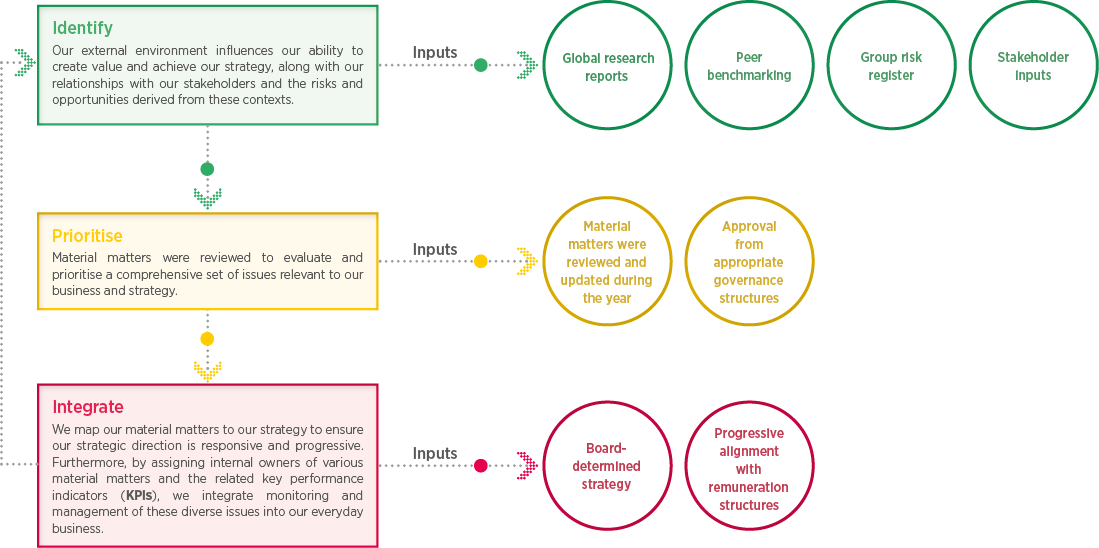
We disclose matters that substantively affect our ability to create value over the short, medium, and long term. We identify these matters using a double materiality determination process to enable us to identify our impact materiality (the effect our business has on society, communities, and the environment) and our financial materiality (those matters that could meaningfully affect our ability to create and preserve financial value over time). Our approach reflects the combined guidance of the Integrated Reporting Framework and the JSE Sustainability Disclosure Guidance.
The process we follow includes:
Overview of our material matters
The identification of material matters is a cornerstone of our integrated reporting process, guided by the principles outlined in the Integrated Reporting Framework. These matters reflect the issues that are most significant to our ability to create and sustain value over the short, medium, and long term, as well as those that matter most to our stakeholders. In this report, we have used our material matters to structure the narrative, ensuring that how we are responding to them is comprehensively addressed across the various sections.
To provide clarity and context, we have included an overview table summarising each material matter, its significance, and the corresponding strategic responses, alongside the associated key risks and impacted SDGs. This table acts as a guide for navigating the report, highlighting where these material matters are further discussed.
For ease of reference, our ESG index, located at the back of this report, consolidates all ESG-related disclosures and provides direct links to the relevant sections.
By addressing these material matters within the narrative of our integrated report, we aim to demonstrate our commitment to transparent and accountable reporting, while ensuring that stakeholders can easily access the information most pertinent to them.
Material matter
What it entails
How we’re responding
Key risks
Impacted SDGs
1. Access to healthcare and medicine
- Strategic stakeholder engagement
- Membership

2. Business continuity and adaptation
- Concentration risk
- System stability/availability
- Strategic execution risk

3. Digital transformation and resilience
- Cybersecurity vulnerabilities
- Technology integration risks

4. Legal, regulatory, and compliance management
- Reputation and conduct risks
- Strategic stakeholder engagement

5. Economic, transformation, political, and societal risk
- Concentration risk
- Strategic stakeholder engagement
- Profit and earnings optimisation

6. Employee wellbeing and retention
- Critical skills retention
- Reputation and conduct risks

7. Member satisfaction
- Membership
- Profit and earnings optimisation
- Reputation and conduct risk
8. Cybersecurity and information security
- Cybersecurity vulnerabilities
- Technology integration risks