
We exist to enhance the quality of our stakeholders’ lives. Engaging meaningfully with various stakeholders is therefore critical to ensure we meet this goal.
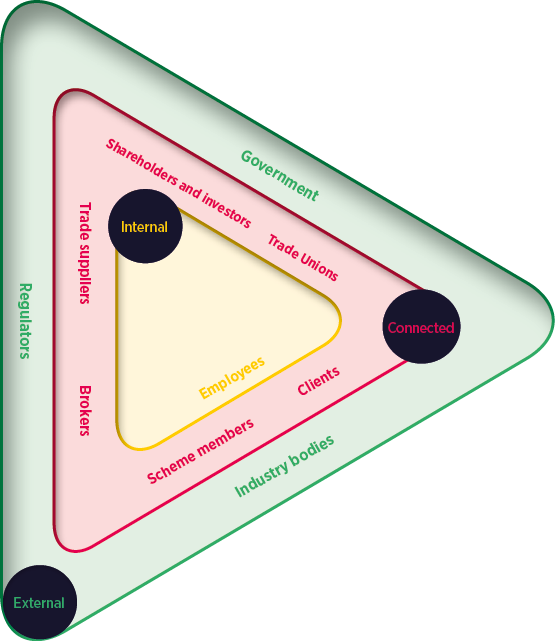
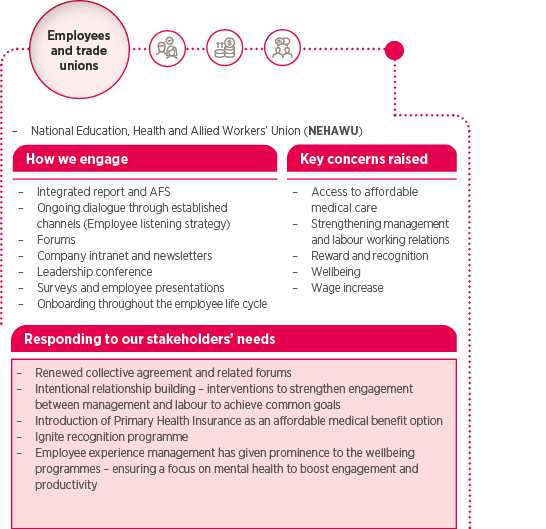
AfroCentric considers its stakeholders as individuals and groups interested in or affected by our activities. They range from employees to the external bodies who impact us. We understand the levels of engagement will vary between stakeholder groups based on their levels of influence or interest. We analyse and classify our stakeholders according to their interests and influence to enable tailored levels of engagement to meet their unique needs. The Board and executive management adopt an inclusive approach to stakeholder management. We engage our stakeholders responsively, constructively, collaboratively and transparently to address their material needs, interests and expectations and respond in a mutually beneficial manner.
Our Social and Ethics Committee provides governance oversight to stakeholder engagement.
Quality of relationship
| Robust relationship characterised by transparency, trust, and mutual understanding | 
|
| Good quality, value-enhancing relationship |  |
| Solid relationship but requires some enhancement to add value |  |
| Relationship established, but significant effort needed to enhance its quality |  |
| No existing relationship |  |
Stakeholder matters in focus
We seek to maintain high levels of corporate transparency. This builds and maintains trust with our stakeholders, growing social capital that enables value creation and preservation while protecting against value erosion. Below is a summary of matters that arose as areas of heightened stakeholder interest during the year.
NHI
AfroCentric supports the principles underpinning the movement towards universal health coverage in South Africa through an integrated health system that offers quality, affordable, and accessible healthcare. However, since the introduction of the NHI Bill in 2019, several concerns from the healthcare industry remain unaddressed. Despite extensive consultations and engagements with stakeholders, including the medical profession, private healthcare sector, and medical aid schemes, President Cyril Ramaphosa signed the Bill into law on 15 May 2024 without incorporating critical feedback.
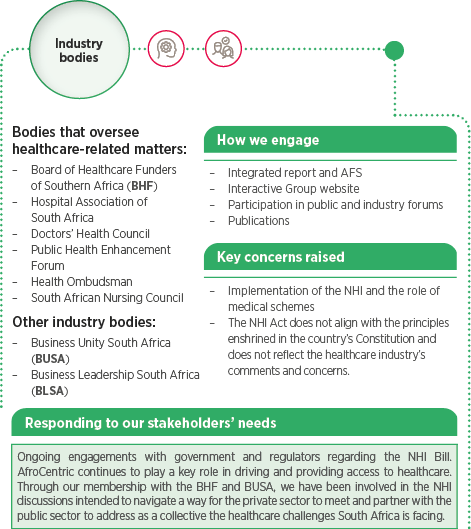
The Board of Healthcare Funders (BHF) has since launched a legal challenge against the constitutionality of the NHI Act. AfroCentric acknowledges the importance of the NHI as a vehicle for universal health coverage but notes that the Act, in its current form, does not align with the principles enshrined in South Africa’s Constitution and fails to address the concerns raised by industry experts and stakeholders adequately.
AfroCentric believes that the success of the NHI hinges on a collaborative and integrated approach, leveraging the expertise of the private sector to build a system tailored to South Africa’s unique needs.
Using its diverse skills and expertise, AfroCentric remains committed to advocating for a transparent and phased transition. Through partnerships with organisations like the BHF and BUSA, we aim to support the development of a fair, sustainable, and inclusive healthcare system.
Stakeholders
- Government and regulators
- Clients
- Shareholders and investors
Related material matters
- Access to healthcare and medicine
- Legal, regulatory and compliance management
- Member satisfaction for clients
Call for regulatory reform on LCBOs
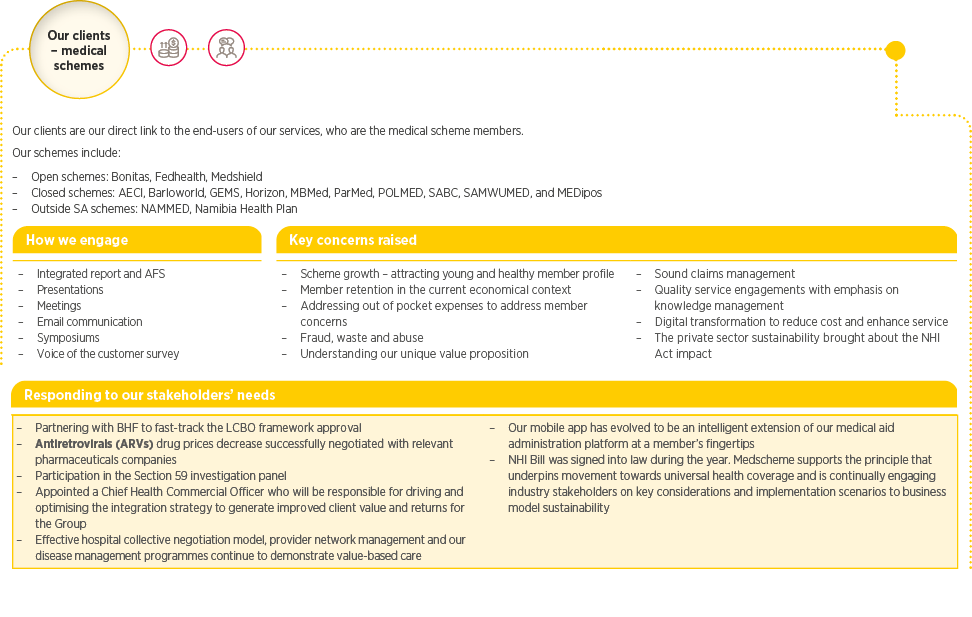
Increasing access to healthcare is a crucial focus for the Group, aligning with our mission to improve stakeholders’ quality of life. We support the introduction of LCBOs in health schemes to help new members access affordable private healthcare, addressing the market need for cost-effective, high-quality healthcare options. This also allows us to collaborate with schemes to integrate LCBOs into the medical scheme’s environment.
The CMS has been working on addressing proposed guidelines on the introduction of the LCBOs with a primary goal to efficiently tackle the burden of disease by implementing measures that guarantee sufficient coverage for beneficiaries. Simultaneously, the aim was also to provide financial protection by diminishing the extent of out-of-pocket payments. Furthermore another critical objective was to secure the long-term sustainability of public health resources.
In February 2025, the CMS issued a report to the Minister of Health on recommendations on the introduction of the LCBOs.
To the disappointment of the Medical Aid Schemes, the CMS advocates against the introduction of a low-income earners option. Instead, it proposes a phased discontinuation of the currently exempted products.
The Minister of Health then published a Government Gazette calling for public comment on the CMS’s report on the low-cost benefit option as well as on the key concerns that the Minister of Health has raised following the review of the report. All comments should be submitted within 3 months from the date of the publication of the Government Gazette.
Stakeholders
- Government and regulators
- Clients
- Shareholders and investors
Related material matters
- Access to healthcare and medicine
- Legal, regulatory and compliance management
- Business continuity and business model adaptation
Neil Harvey and Associates (NHA)
After navigating a 17-year arbitration process, our subsidiary, Medscheme, welcomed in the June 2024 financial year the arbitrator’s decision to dismiss all the claims brought against it by the software developer NHA as baseless. The arbitrator also awarded costs in favour of Medscheme.
NHA’s claims arose out of a Confidentiality Agreement and Software Licence Agreement concluded with Medscheme in 2003 and 2004, respectively.
NHA launched proceedings against Medscheme and others in 2007, claiming damages for multiple causes of action, including fraudulent misrepresentation, unlawful competition, and emulation of software functionality. The total quantum of the claims was initially approximately R80 million, but over the years, the claims grew vastly in quantum and scope and at one stage exceeded R350 million.
NHA appealed the decision, and stakeholders will be updated when the appeal is heard.
Stakeholders
- Shareholders and investors
Related material matters
- Legal, regulatory and compliance management
Section 59 Inquiry
In early 2019, healthcare providers and the National Health Care Professionals Association accused medical aid schemes of unfair treatment, prompting CMS to investigate these allegations. Our fiduciary duty is safeguarding members’ funds and access to affordable, quality healthcare. Notably, the practices that we investigate and quantify a loss assessment constitute less than 2% of the total medical practices paid by Medscheme. We always pursue forensic processes that are fair, transparent and within the law.
Following the release of the Section 59 Investigation Panel Interim Report, we submitted a formal response to the findings. There were further public virtual hearings in June 2023. On 31 January 2024, we provided a further submission. On 3 June 2024, the CMS notified the industry that the final report is close to completion and will be released and published as soon as possible. We continue to work with the panel to ensure its outcome does not negatively impact the healthcare industry and our reputation. Stakeholders are still awaiting the publication of the final report. The CMS has not provided a specific release date but has reiterated its commitment to transparency and thoroughness in concluding the investigation.
Stakeholders
- Industry bodies
- Clients
- Shareholders and investors
Related material matters
- Access to healthcare and medicine
- Legal, regulatory and compliance management
Capital and working capital management
The Group continues to follow a prudent approach to capital management, and working capital management has likewise been an area of heightened focus for the year.
Please see our CFO review for details on these topics.
Stakeholders
- Shareholders and investors
Related material matters
- Access to healthcare and medicine
- Legal, regulatory and compliance management